

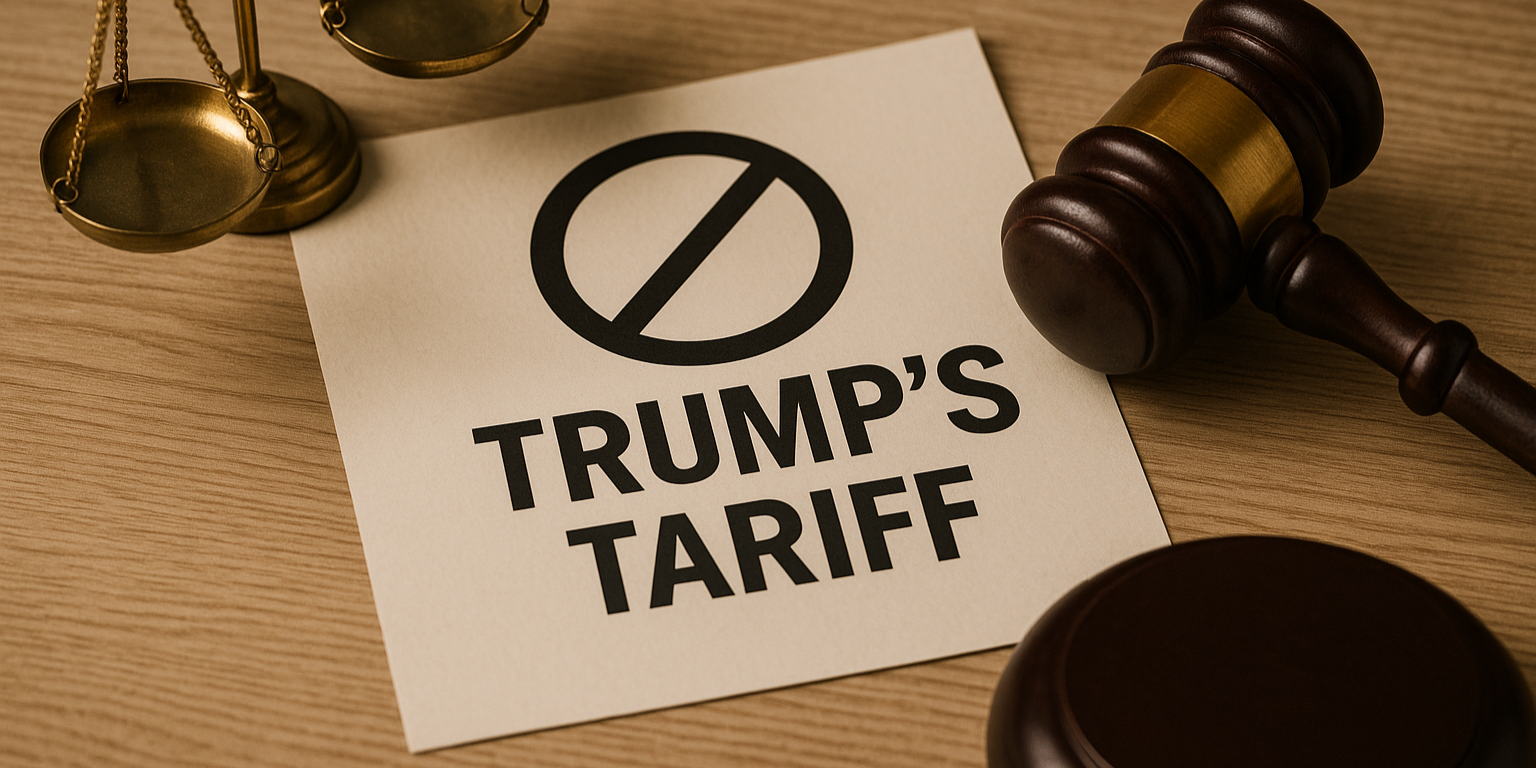
A U.S. federal court has ruled that former President Donald Trump’s sweeping tariffs, commonly known as the “liberation day” tariffs, exceed his authority under the International Emergency Economic Powers Act (IEEPA). The court’s decision, issued on May 28, 2025, invalidates the tariffs, which were imposed in 2020 as part of Trump’s efforts to address perceived trade imbalances with countries such as China. This ruling represents a significant check on executive power and may set a critical precedent for future trade policy decisions.
The tariffs, which targeted hundreds of billions of dollars’ worth of imports, were part of Trump’s broader strategy to reduce the U.S. trade deficit and force countries to revise their trade practices. In particular, Trump had justified the tariffs as necessary to protect U.S. manufacturing jobs and address issues like intellectual property theft. However, the move sparked significant controversy, with critics arguing that the tariffs imposed economic harm on American consumers and businesses, leading to higher prices and disrupted supply chains.
The court ruled that the use of the IEEPA to justify the imposition of these tariffs was an overreach of presidential power. The IEEPA grants the president authority to regulate trade in times of national emergency, but the court determined that the scope of the tariffs went beyond what was permissible under the law. The decision reinforces the principle of checks and balances, emphasizing the importance of congressional oversight in trade matters and limiting the ability of the executive branch to unilaterally impose sweeping economic measures.
The ruling has significant implications for the future of U.S. trade policy, particularly regarding the president’s ability to unilaterally impose tariffs. While presidents have historically used the IEEPA to impose certain trade restrictions, this ruling suggests that future tariffs must have clearer legal justifications and may require broader consultation with Congress. The decision could reshape how trade policy is handled in the U.S., particularly in light of growing concerns over economic nationalism and protectionist measures.
For the business community, the ruling provides some clarity and relief, particularly for industries that were adversely affected by the tariffs. Many companies, especially those in sectors like technology, retail, and agriculture, had faced significant challenges due to the higher costs associated with tariffs on imported goods. The court’s decision could potentially lead to a more stable trade environment, as businesses look for predictability and consistency in U.S. trade policy.
However, the Trump administration, which had staunchly defended the tariffs, is expected to appeal the court’s decision. If the decision is upheld, it could mark a major shift in the balance of power regarding trade policy, with future presidents potentially facing greater constraints on their ability to impose tariffs without congressional approval.
The case also highlights the continuing debate over the effectiveness of tariffs as a tool for addressing trade imbalances. While some supporters of Trump’s trade policies argued that the tariffs were necessary to protect U.S. interests, others viewed them as damaging to the economy and disruptive to international trade relationships. The court’s ruling suggests that the legal basis for such measures may be more limited than previously thought, prompting future administrations to reconsider their approach to international trade.
In the coming months, the case is likely to continue to influence debates over U.S. trade policy. As the legal process plays out, this ruling may have long-lasting effects on how the U.S. navigates its trade relationships with key global partners.