

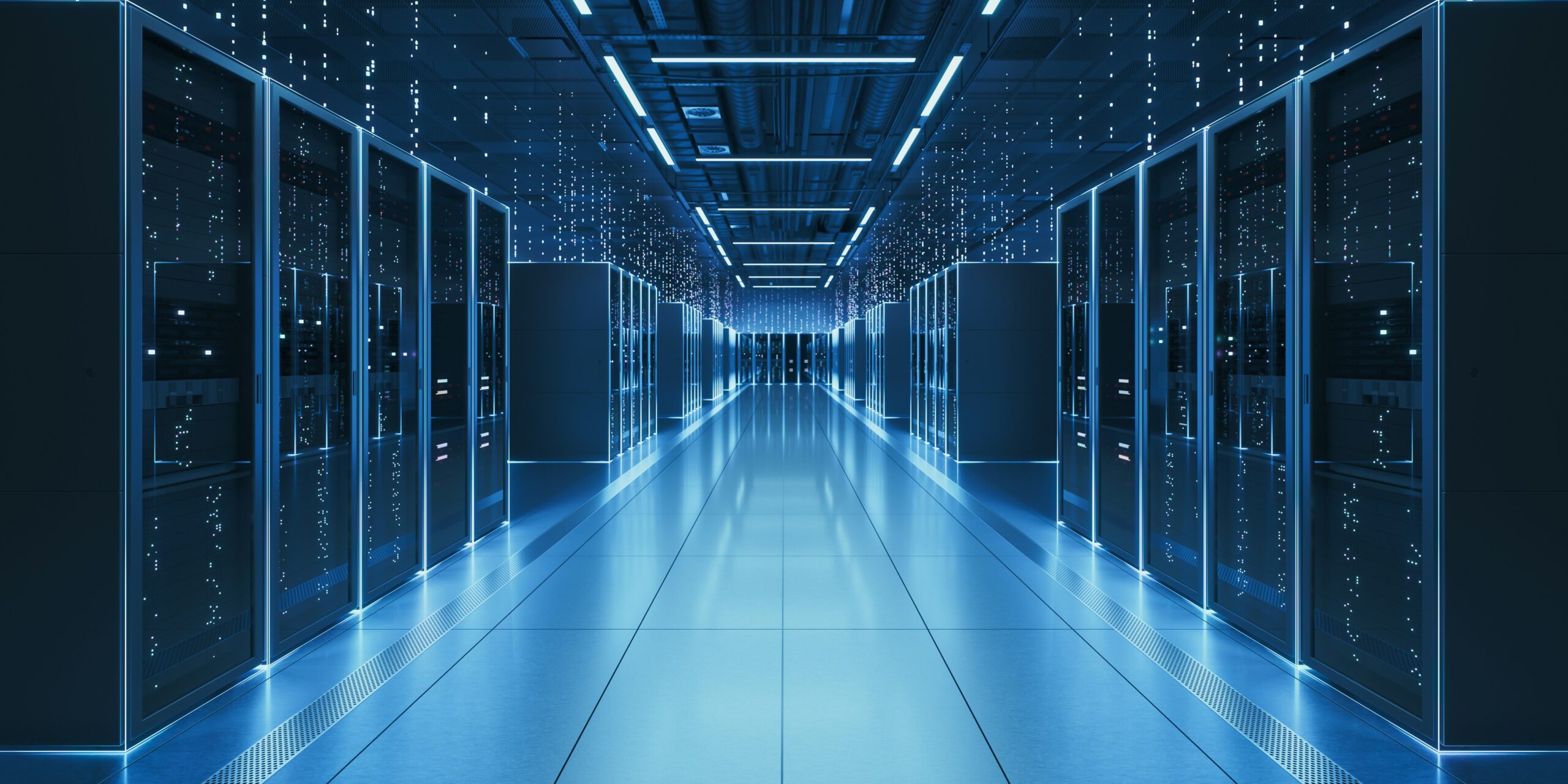
As the year ends, a striking shift is underway in the U.S. commercial real estate market. Investors are increasingly moving away from traditional office spaces and channeling their capital into data centers—specialized facilities that have become central to the rapidly expanding infrastructure needs of artificial intelligence. This redirection of real estate capital marks one of the most pronounced trends of 2025, signaling a new era in which real estate value is being defined not by location alone but by the ability to support the digital backbone of the global economy.
According to recent industry analysis, data centers ranked among the top-performing assets in the commercial property sector this year, second only to manufactured housing in terms of total returns. What was once viewed as a niche market has now captured mainstream investor attention, largely due to rising demand from hyperscale tech companies and cloud service providers. These firms—many of them global leaders in AI development—are opting to lease capacity in pre-existing data centers rather than build new facilities themselves, fueling a boom in leasing activity across the United States.
This surge in demand reflects a broader evolution in the function of commercial real estate. No longer is the office tower the pinnacle of commercial investment. In today’s tech-driven world, facilities that can accommodate high-performance computing, support continuous data flow, and offer reliable energy and cooling systems are commanding premium interest. For institutional investors, private equity firms, and global real estate funds, data centers have quickly become a key strategic play, offering both high yield potential and alignment with long-term digital infrastructure growth.
Much of the investor enthusiasm stems from the broader artificial intelligence boom. AI workloads require enormous computational power and generate vast amounts of data—both of which must be processed, stored, and distributed with high efficiency. Data centers equipped with cutting-edge networking and cooling technology are essential for supporting these processes. As AI becomes embedded in everything from healthcare and finance to logistics and consumer products, the demand for advanced digital infrastructure is poised to grow exponentially.
Major technology firms are leading the charge. Companies like Amazon, Google, Microsoft, and Meta are driving a significant portion of leasing demand, seeking access to data center space that meets the technical specifications required for their generative AI and machine learning platforms. In many cases, they are choosing not to construct their own centers, but instead partner with real estate operators that can deliver the necessary facilities quickly and at scale. This shift has created a strong pipeline of leasing opportunities for developers and landlords who specialize in this sector.
At the same time, the traditional office market continues to struggle. Remote and hybrid work models, which became widespread during the pandemic, have permanently altered demand for office space. High vacancy rates in downtown cores, coupled with declining rental growth, have made office development less attractive. Many investors are now redirecting capital once earmarked for office projects into data center developments, viewing them as a more future-proof asset class in a transforming economy.
Despite their rising profile, data centers are not without risk. Their technical complexity and operational demands differentiate them sharply from conventional real estate. Building and maintaining a data center requires substantial capital investment and careful planning around power usage, network latency, physical security, and redundancy. Furthermore, these facilities are heavily reliant on uninterrupted access to large volumes of electricity—often from renewable sources—posing challenges in an era of energy transition and grid instability.
Industry analysts have raised concerns about supply chain constraints and the availability of power in key regions. As competition for suitable sites intensifies, some developers are facing delays and increased costs related to utility coordination and equipment shortages. Additionally, with the rise in AI-linked data center construction, environmental concerns about energy use and carbon footprints have come under greater scrutiny. While some operators have made significant strides in integrating sustainable energy solutions, the long-term environmental impact of large-scale data infrastructure remains an open question.
Another consideration is market saturation. While current demand is robust, the rapid pace of construction and leasing raises questions about how long the growth curve can be sustained. Analysts caution that if AI adoption rates flatten or economic conditions shift, the data center sector could be exposed to volatility, particularly in markets with high concentrations of new builds.
Still, the broader outlook remains optimistic. Real estate funds and asset managers are incorporating data center investments into long-term portfolio strategies, viewing them not only as high-growth assets but as essential infrastructure. Some are also exploring related sectors such as edge computing hubs, undersea cable landing stations, and specialized energy infrastructure—further signaling the deepening relationship between digital transformation and physical real estate.
The geographic spread of data center development is also beginning to change. While Northern Virginia remains the largest and most established hub in the United States, secondary markets such as Phoenix, Atlanta, Dallas, and Salt Lake City are attracting new attention due to favorable land costs, available energy, and business-friendly regulations. Suburban and exurban locations, once overlooked, are now viewed as strategic assets in the race to build scalable, AI-ready infrastructure.
As 2025 ends, it is increasingly clear that data centers are more than just a commercial real estate trend—they are fast becoming the backbone of a digitized, AI-driven economy. For investors looking to stay ahead of technological change, the convergence of artificial intelligence, energy infrastructure, and real estate is no longer optional. It is the new frontier.
Read Also: https://rentmagazine.com/u-s-commercial-data-center-energy-strategies-evolve-amid-ai-growth/